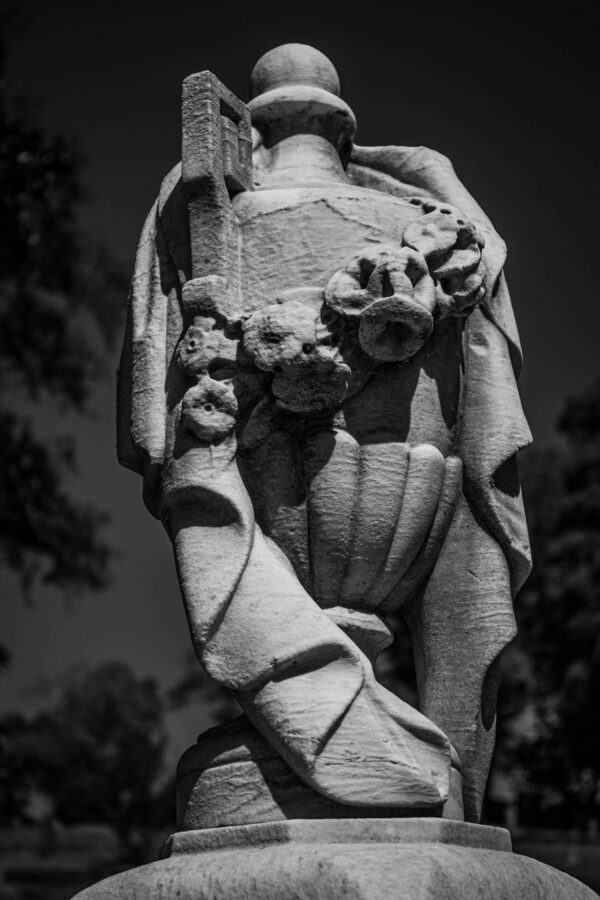
Earth, fire, water, birds, stone, soil, and the strange ways humans have answered one unavoidable question
Eventually, every human society has to answer one terribly practical question.
What do we do with the body?
Not what happens to the soul.
Not whether consciousness continues.
Not whether there’s a heaven, hell, reincarnation, ancestral realm, another dimension, another life, or simply nothing at all.
Those are different questions, and human beings have spent thousands of years arguing about them.
But before any of those mysteries can be settled—assuming they ever can be—there is something much more immediate lying in the room.
A body.
Someone was here.
Now they aren’t.
And the physical thing they inhabited remains.
What humanity has chosen to do next is one of the strangest and most revealing stories our species has ever written.
We have buried our dead.
Burned them.
Preserved them.
Entombed them.
Offered them to animals.
Placed them in water.
Collected their bones.
Built enormous monuments over them.
And now we’re developing new methods that can quite literally turn us into soil.
Different places.
Different centuries.
Different gods.
Different ideas about what comes next.
The same dead body.
And the same question.
What do we do now?
We Put Them in the Earth
For many Americans, burial feels so normal that we rarely stop to consider how strange it actually is.
Someone dies.
We place the body inside a container.
We lower that container into a hole.
We cover it with earth.
Then we place a permanent marker above the location so people know exactly where the body is.
And we return.
Sometimes for generations.
But burial is enormously older than the modern cemetery with its polished granite, manicured lawn and orderly rows.
Humans have deliberately buried their dead since deep prehistory.
And those graves haven’t always contained only bodies.
People have been buried with tools, weapons, jewelry, food, clothing, flowers and countless other objects.
Why?
The answers vary.
Sometimes those objects reflected status or identity. Sometimes they carried religious or ceremonial meaning. Sometimes they appear to have been intended for whatever journey people believed came next.
Whatever the explanation, something remarkable happened very early in our story.
Humans stopped treating dead members of their communities as merely biological remains.
We made death meaningful.
Eventually we marked the places where people were buried.
A pile of stones.
A wooden marker.
A carved slab.
A monument.
A mausoleum.
We wrote names.
Dates.
Prayers.
Poems.
Warnings.
Promises of reunion.
We carved lambs above children and clasped hands above married couples. We carved crosses, stars, urns, flowers, angels, anchors and countless symbols intended to say something about the person beneath them.
A cemetery became something more than a place to dispose of bodies.
It became a landscape of memory.
A stone standing over a grave makes one remarkably human declaration:
Someone was here.
We Gave Them to Fire
Other cultures have answered the question with fire.
Cremation is ancient, appearing in different societies and carrying very different meanings depending upon the people practicing it.
Ancient Greeks and Romans practiced cremation during portions of their histories. Cremation remains deeply significant within Hindu traditions. Other religious traditions have embraced, discouraged, prohibited or gradually reconsidered it.
And modern Americans have changed their minds about it dramatically.
A little more than half a century ago, cremation was a relatively uncommon choice in the United States.
Today it is the majority.
The National Funeral Directors Association projected cremation to account for 63.4 percent of U.S. dispositions in 2025, compared with 31.6 percent for burial. Its projections have cremation reaching more than 80 percent by 2045.
That’s not some hypothetical future transformation.
We’re living through it.
Within a few generations, the dominant American answer to What do we do with the body? has fundamentally changed.
There are plenty of reasons.
Cost.
Mobility.
Changing religious attitudes.
Fewer family cemetery plots.
Personal preference.
Environmental considerations.
And perhaps simply familiarity.
Something that seemed strange to one generation becomes ordinary to another.
Which is worth remembering before we decide another culture’s treatment of its dead is bizarre.
We Gave Them to the Sky
This is where our own cultural assumptions become particularly obvious.
Within Tibetan Buddhist traditions, forms of what Westerners commonly call sky burial developed in which a corpse is ritually prepared and offered to vultures.
To someone raised around embalming, caskets and cemetery burial, that can sound horrifying.
But stop for a moment.
Imagine explaining conventional American burial to someone who had never encountered it.
We take a corpse.
Sometimes chemically preserve it.
Wash and dress it.
Apply cosmetics so it resembles the living person.
Place it inside an expensive decorative container.
Sometimes place that container inside another protective structure.
Bury everything beneath a carefully maintained lawn.
Then periodically visit the location.
From the outside, all human death rituals are strange.
We’re simply accustomed to our own.
Historic Zoroastrian funerary traditions provide another example. Concerns about a corpse contaminating sacred elements such as earth and fire contributed to practices involving exposure of the dead in structures commonly called Towers of Silence, where bodies could be consumed by birds and exposed to the elements.
To one culture, allowing vultures access to a corpse may appear disrespectful.
Within another worldview, putting that same corpse into sacred earth could be the greater violation.
Same body.
Different understanding of the universe.
Different answer.
We Tried to Keep Them
Then there are the times humanity seems to have said:
Perhaps decomposition doesn’t have to happen quite yet.
Ancient Egyptian mummification is the obvious example.
Bodies were carefully preserved because the physical body held importance within Egyptian beliefs concerning death and the afterlife.
But Egyptians were hardly alone in preserving their dead.
Human bodies have been intentionally or naturally preserved through drying, freezing, embalming and other environmental or cultural processes across different places and eras.
Modern embalming is part of that much larger human story.
There is something fascinating about our desire to resist decomposition.
Nature is remarkably efficient.
Once life stops maintaining the body, biological processes begin returning it to the larger system from which it came.
And humans have repeatedly intervened.
Not yet.
Keep the face recognizable.
Keep the body intact.
Give us another afternoon.
Sometimes preservation has lasted considerably longer than anyone involved could have imagined.
Thousands of years later, scientists examine preserved bodies and discover clothing, tattoos, injuries, diseases, diets and even evidence of a person’s final meals.
The dead continue telling us things.
Apparently decomposition isn’t enough to stop a good story.
Sometimes We Keep the Bones
Burial hasn’t always meant put them underground and never disturb them again.
Space has always mattered.
In various cultures and periods, bodies were sometimes allowed to decompose before bones were collected and moved elsewhere.
Hence the ossuary.
The charnel house.
And some of the most extraordinary places in death culture: spaces where human bones aren’t hidden at all.
Skulls stacked together.
Femurs arranged into patterns.
Entire rooms containing the physical remains of thousands of people.
Modern Western death culture tends to keep bones safely out of sight.
These places do the opposite.
They place mortality directly in front of you.
No euphemism.
No polished granite lawn.
Just the remains of people who once had appointments, arguments, ambitions, meals, headaches, lovers, chores and plans for next week.
There’s a brutally simple message written into every skull:
They were alive.
Now they aren’t.
You are alive.
Finish the equation yourself.
We Put Them in Water
The sea has received its share of us too.
Burial at sea has existed in various forms, particularly among maritime cultures and navies, and regulated forms remain possible today.
Cremated remains are scattered into oceans, rivers and lakes every day.
And now water is becoming part of another increasingly discussed method of disposition.
Alkaline hydrolysis, sometimes called aquamation or water cremation, uses water, alkaline chemicals, heat and circulation to accelerate the breakdown of the body’s soft tissues.
The remaining bone material can then be processed and returned to the family, somewhat like the remains produced by flame cremation.
The technology sounds futuristic to many people simply because it isn’t yet familiar.
But that’s how cultural norms work.
Yesterday’s disturbing idea becomes today’s alternative.
Today’s alternative can become tomorrow’s ordinary.
And Now We Can Become Soil
Perhaps no emerging method illustrates our changing relationship with death better than natural organic reduction.
Most people know it by a considerably more memorable name:
Human composting.
Yes.
Human beings can now intentionally become soil.
A body is placed with organic materials under controlled conditions that encourage natural decomposition. Over time, the remains are transformed into material resembling soil that can be returned to loved ones or used in permitted ways depending upon local law.
It sounds simultaneously radical and incredibly ancient.
For thousands of years humans have developed increasingly elaborate ways of separating the dead from natural decomposition.
Vaults.
Caskets.
Stone tombs.
Embalming.
Mausoleums.
Now one emerging answer essentially says:
Put me back into the system.
Let microbes do what microbes do.
Let the molecules that temporarily constituted me become something else.
The legal landscape is changing rapidly as states consider or authorize natural organic reduction, so availability depends upon where someone lives.
But the larger idea is already here.
The future of death may look surprisingly like the oldest biological process on Earth.
Return.
Are We Running Out of Room?
Whenever the future of burial comes up, population inevitably enters the conversation.
There are more than eight billion human beings alive today.
All of us are temporary.
So where do we put everyone?
The answer is more complicated than simply declaring that we’re going to run out of cemetery space.
Land availability differs dramatically between rural and urban areas. Some countries reuse graves after defined periods. Some rely heavily on cremation. Some build upward through mausoleums and columbaria. Others are experimenting with conservation burial and alternative disposition.
Cost matters.
Urbanization matters.
Environmental concerns matter.
Religion matters.
Tradition matters.
Family mobility matters.
And increasingly, personal preference matters.
I doubt humanity is moving toward one universal method of handling our dead.
The opposite seems more likely.
The future may offer more choices than any previous generation has had.
Traditional burial.
Natural burial.
Conservation cemeteries.
Cremation.
Mausoleums.
Columbaria.
Aquamation.
Natural organic reduction.
And probably methods we haven’t normalized—or invented—yet.
Which means the story isn’t ending.
We’re simply writing another chapter.
The Dead Tell Us About the Living
That’s ultimately what makes burial practices so fascinating.
They’re supposedly about dead people.
But dead people aren’t making the decisions.
We are.
The living.
We decide whether a body should be preserved or allowed to decay.
Whether it should be burned or buried.
Whether vultures touching it constitutes desecration or sacred return.
Whether the grave should remain forever or eventually be reused.
Whether ashes belong on a mantle, beneath a tree, scattered into an ocean or divided among family members.
Whether becoming soil sounds horrifying or beautiful.
Those decisions reveal our religions.
Our fears.
Our understanding of nature.
Our relationship with the body.
Our economic circumstances.
Our ideas about dignity.
And perhaps most importantly, what we believe a human being actually is.
Is this body me?
Was it merely something I occupied?
Does something leave it?
Does something continue?
Or is the body all there ever was?
People have been answering those questions for thousands of years.
We’re not going to settle them here.
Morbidly Patient isn’t terribly interested in manufacturing certainty where certainty doesn’t exist.
We’re interested in what humans do with the question.
And Eventually, It’s Your Body
That’s the uncomfortable part.
This isn’t merely anthropology.
Eventually this becomes personal.
One day—hopefully a very long time from now—someone may have to decide what happens to your remains.
Earth?
Fire?
Water?
Stone?
Soil?
Something else?
Perhaps you’ve already decided.
Perhaps you’ve never seriously thought about it.
Maybe your beliefs make the answer obvious.
Maybe you don’t have beliefs that provide an answer.
Maybe you simply don’t care because, as you’ve reasonably concluded, you won’t be there to complain about it.
But someone probably will be there.
Someone who knew you.
Someone trying to figure out what you would have wanted.
Someone attempting to make meaning from the strange transformation that occurs when a person they love becomes a body they must now do something with.
And perhaps that’s why human funerary practices have always been about more than disposal.
They’re one of the ways the living attempt to negotiate the impossible boundary between:
You were here.
and
Now you aren’t.
We’ve answered that moment with earth.
Fire.
Birds.
Water.
Stone.
Chemistry.
Soil.
Prayer.
Ritual.
Art.
And memory.
Thousands of cultures.
Thousands of answers.
One unavoidable destination.
And eight billion living people currently waiting their turn.
Patiently, one hopes.
Morbidly Patient
A Darker Curiosity.
For those curious enough to look where others look away.
Leave a Reply